
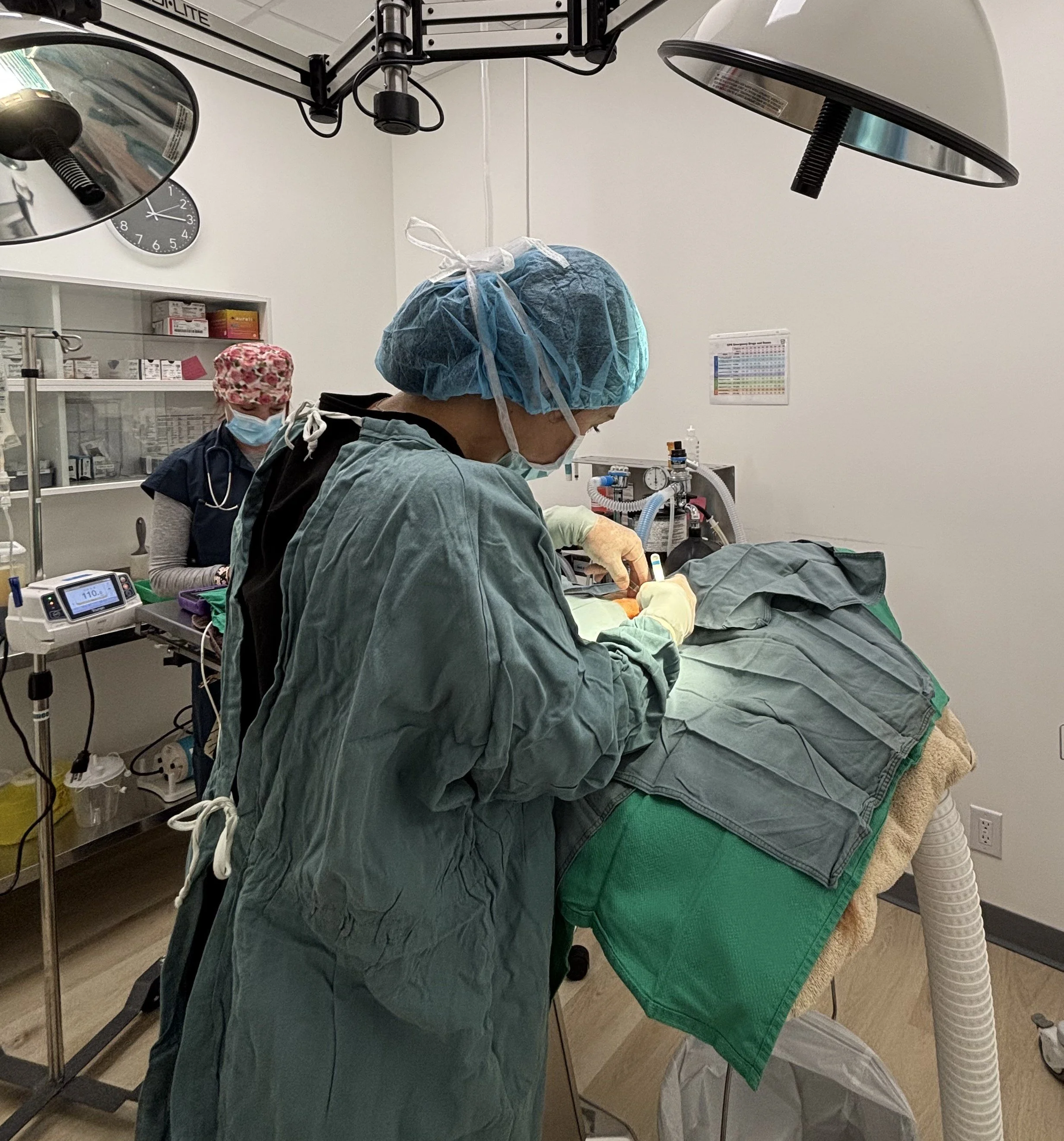
Surgical Procedures
Whether your pet needs a planned procedure or more advanced surgery, we provide safe, modern, and compassionate surgical care for our. We understand the anxiety that comes with veterinary procedures, which is why our experienced staff continuously monitors your pet throughout every step of their treatment and recovery.
A pre-surgical consultation will give you the opportunity to ask questions about the surgery and what to expect during the recovery period. Every patient is carefully examined before every sedation or general anesthesia. Pre-surgical tests like bloodwork and sometimes diagnostic imaging help us to predict and reduce potential anesthetic complications. Most of our surgical patients benefit from pre-visit-pharmaceuticals to help them feel more relaxed during their hospitalization and recovery at home.
Anesthesia:
Anesthesia is a safe, routine, and essential component of modern veterinary care that keeps your pet completely pain-free and stress-free during surgical and medical procedures. At Peninsula Veterinary Hospital, your pet's safety is our top priority. Our experienced team uses advanced monitoring technology and strict safety protocols to support your companion before, during, and after their procedure.
Anesthesia uses targeted medications to block pain and remove consciousness. Depending on the procedure and your pet's specific health needs, we utilize:
Local Anesthesia: Numbs a specific, localized area of the body.
Sedation: calms an animal, reduces anxiety, and induces a state of relaxation or light sleep during a minimally invasive medical procedure.
General Anesthesia: Safely places your pet into a controlled, unconscious state for more involved procedures.
While all medical procedures carry some degree of risk, veterinary advancements have made anesthesia safer than ever.
To minimize risks, every patient receives:
A Comprehensive Physical Exam: To evaluate overall health prior to the procedure.
Pre-Anesthetic Diagnostics: Bloodwork or imaging to check internal organ function.
Continuous Monitoring: A dedicated registered veterinary technologist (RVT) closely tracks vital signs including heart rate, blood pressure, oxygen saturation, exhaled carbon dioxide, respiration, and temperature throughout the entire procedure.
Our veterinarians tailor every protocol based on your pet’s temperament, age, medical history, and procedure.
What to Expect: Step-by-Step
1. Pre-Procedure Evaluation: We perform a final exam and run necessary diagnostic tests to clear your pet for anesthesia.
2. Pre-visit pharmaceuticals: You will be provided with oral medications to reduce anxiety and nausea to give at home several hours before bringing your pet to the hospital.
3. Sedation & Preparation: We administer gentle sedatives to relax your pet and place an intravenous catheter for fluid and medication delivery. Small areas of fur will be clipped for catheter placement and surgical preparation.
4. Anesthesia & Surgical Care: Anesthesia is maintained via intravenous medications and/or inhaled gas while our team continuously monitors your pet's vital signs and anesthetic depth.
5. Monitored Recovery: Your pet recovers in a warm, quiet environment under close observation as they wake up.
Frequently Asked Questions
Is anesthesia painful? No. Anesthesia completely prevents pain during the procedure. For post-procedure recovery, we build a tailored pain management plan, often incorporating local numbing agents and take-home medications, to keep your pet comfortable.
What will my pet be like after waking up? It is normal for pets to feel groggy, slightly disoriented, or unsteady on their feet for a few hours. Mild side effects like temporary nausea or slight shivering can occur but usually resolve quickly. We will provide full, written discharge instructions when you pick up your pet.
Are there long-term side effects? Most pets return to their normal routines within 24 hours with no lasting effects. Senior pets or pets with underlying conditions may take a bit longer to fully recover, which we will discuss with you beforehand.
How should I prepare my pet?
Follow Fasting Guidelines: Withhold food as instructed by our care team. Continue to offer water until you bring your pet to the hospital to prevent dehydration.
Verify Medications: Confirm with us beforehand whether to give your pet’s routine medications on the morning of the procedure.
Give pre-visit pharmaceuticals: this cocktail of medications reduces anxiety and nausea while they are hospitalized, setting them up for a calmer and safer experience and recovery.
Keep a Calm Demeanor: Pets pick up on your energy; staying calm helps keep them relaxed prior to drop-off.
Have Questions? We’re Here to Help!
We know that planning a procedure can feel overwhelming, and we are dedicated to keeping you informed every step of the way. If you have questions about an upcoming procedure or dog and cat anesthesia, contact the Peninsula Veterinary Hospital team today!
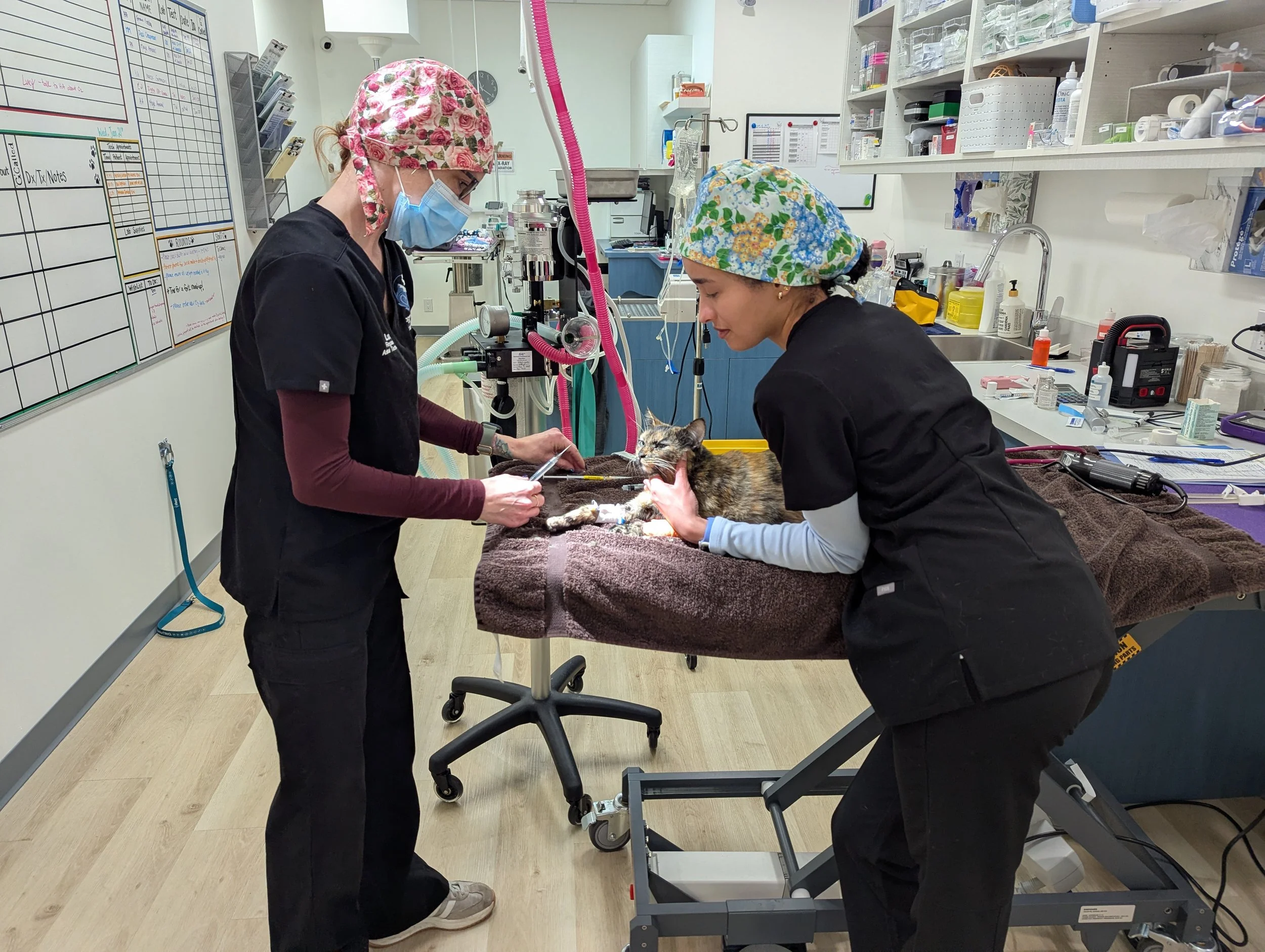
Induction of anesthesia: giving a fast-acting anesthetic drug through an intravenous catheter to ease our patient into an unconscious state before intubation.
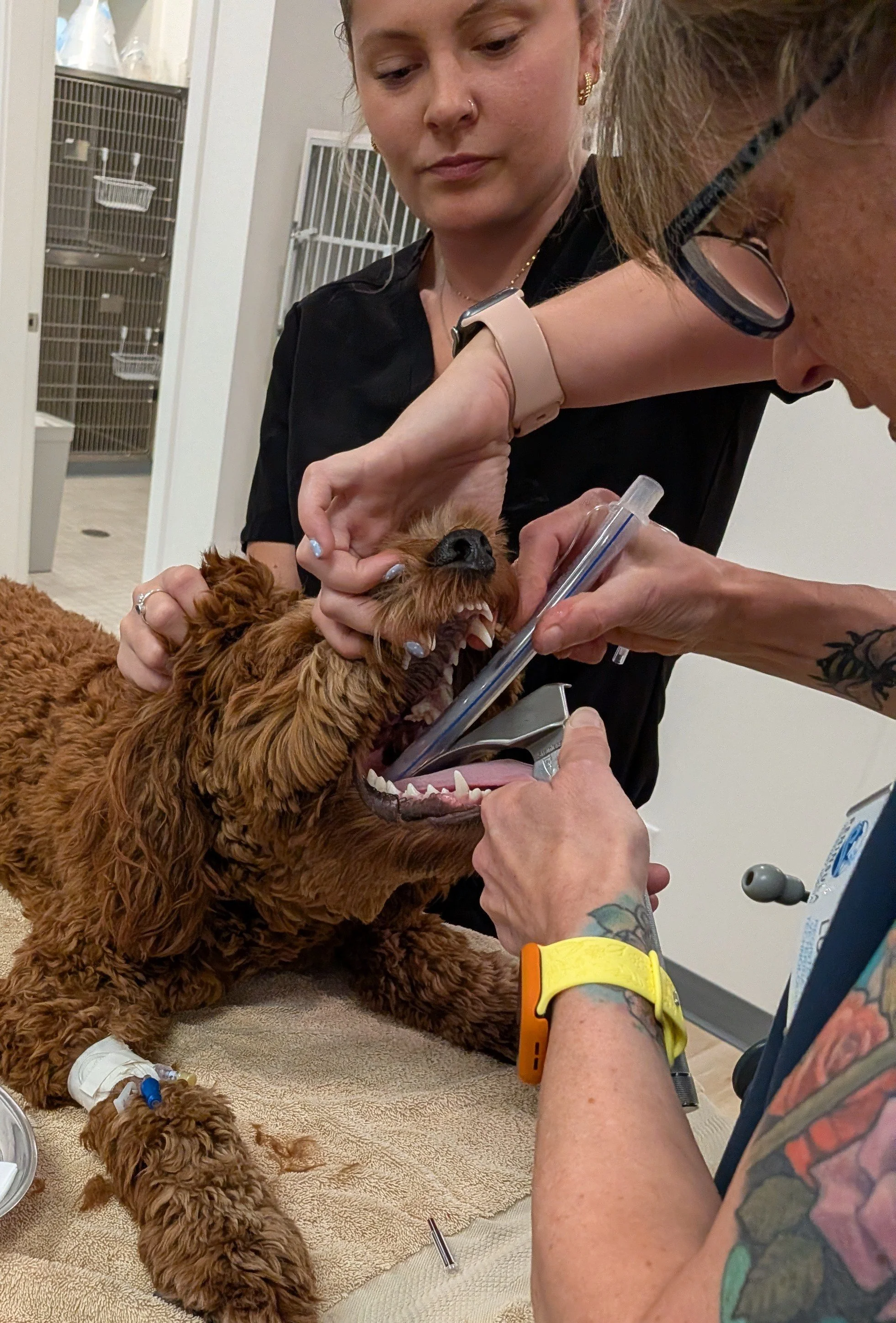
Intubation: placing an endotracheal tube that protects the airway and delivers oxygen and gas anesthesia to our patient.
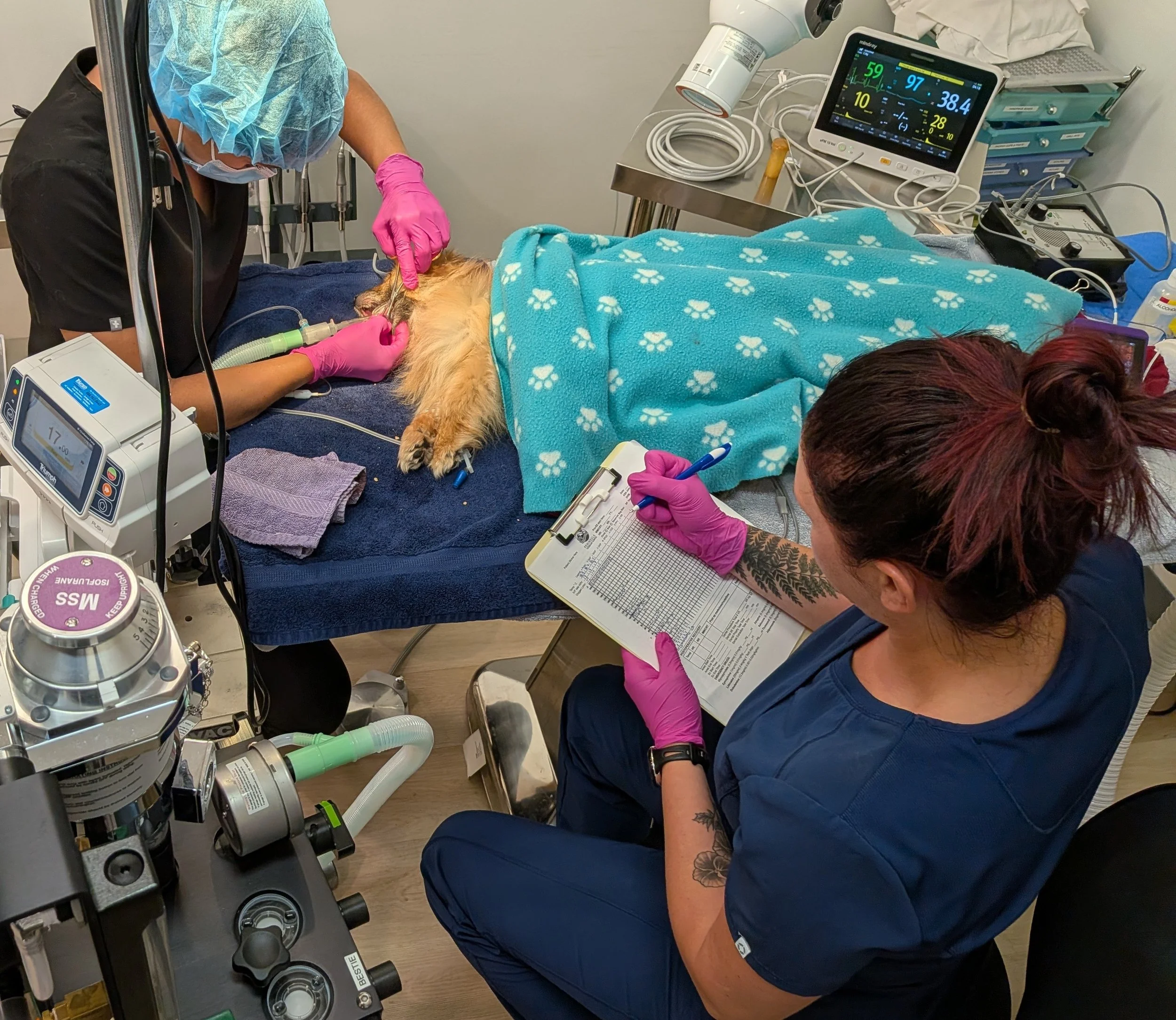
Continuous monitoring: a registered veterinary technologist never leaves a patient’s side, monitoring and charting vital parameters throughout anesthesia and until the patient is awake.
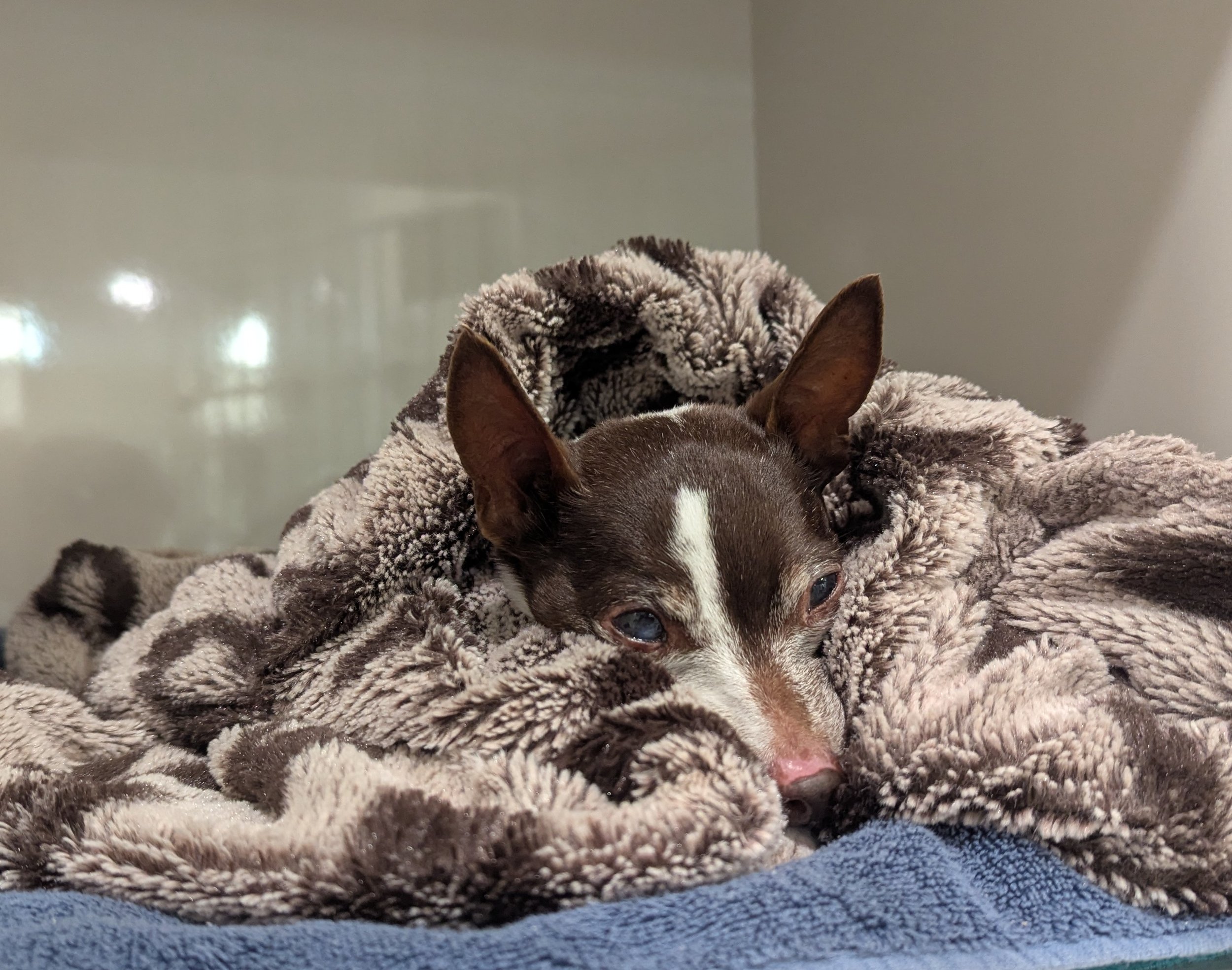
Recovery: our patients are given a quiet, comfortable, and warm space to slowly wake up from general anesthesia or sedation.
Elective spay and neuter:
Spaying or neutering your pet is a essential step toward a healthier, longer life. While these procedures prevent unexpected litters, the benefits extend much further:
Medical Benefits: Spaying protects females from life-threatening uterine infections (pyometra) and some reproductive cancers such as breast cancer. Neutering males prevents testicular cancers and reduces the risk of prostate inflammation and perineal hernias.
Behavioral Benefits: Spaying eliminates heat cycles and unwanted male attention. Neutering curbs roaming urges, reducing accident risks and minimizing indoor marking and aggression.
Cost Savings: Routine spaying or neutering is a one-time investment that prevents expensive emergency care, surprise litter costs, and property damage down the road.
Additional Preventative Procedures:
Some pets benefit from additional surgical procedures at the same time as an elective spay or neuter:
Prophylactic gastropexy: Some deep-chested breeds (German Shepherds, Great Danes, Standard Poodles, Boxers) are at risk for life-threatening gastric dilatation and volvulus (GDV) which is when the stomach distends with gas and food then twists. The twist can be prevented by permanently attaching (tacking) the stomach to the abdominal wall.
Persistent baby teeth extraction: Persistent (retained) deciduous, or baby, teeth need surgical extraction because their failure to fall out forces adult teeth to crowd into the same space, leading to severe dental and alignment complications. This is common in toy breeds (Yorkshire Terriers, Chihuahuas, Toy Poodles, Maltese, and Pomeranians) and flat-faced breeds (Shih Tzus, Pugs, French and English Bulldogs, Boston Terriers, and Boxers).
Hernia repair: An umbilical hernia is a congenital deformity where abdominal contents protrude outside the abdominal wall at the belly button. Large hernias should be repaired to prevent to reduce the risk of damaging abdominal contents.
Dewclaw removal: sometimes, floppy dewclaws on the hind legs are removed in puppies to prevent traumatic tears. At Peninsula Veterinary Hospital, we do not remove front leg dewclaws because these claws are important in providing traction and stabilization of the carpus (wrist).
There are many factors to be considered when choosing the best age to spay or neuter an individual pet or whether they need additional preventative surgical procedures. We are happy to discuss these complexities during a presurgical consultation.
Soft Tissue Surgeries
Our experienced veterinary team performs a wide range of soft tissue surgeries involving the skin, body wall, and internal organs. We provide safe, compassionate, and precise surgical care customized to our patients’ needs.
Common Soft Tissue Procedures
Soft tissue surgery encompasses any procedure not involving bones or joints. We frequently recommend soft tissue surgery to treat conditions such as:
Mass & Lump Removals: Surgical excision of cutaneous or internal tumors and growths.
Foreign Body Retrieval: Removing ingested objects blocking the stomach or intestinal tract.
Wound Care & Reconstruction: Repairing traumatic lacerations and skin injuries.
Bladder stone removal: Some types of bladder stones require prompt surgical removal to prevent to fix a urine outflow obstruction and to remove a source of pain and infection.
Eye surgeries: we offer a wide range of eye surgeries, including Cherry Eye correction, eyelid mass removal, entropion and ectropion repair, and eye removal (enucleation).
Following a thorough physical evaluation and diagnostic workup, our team will design the best treatment plan for your pet. If a procedure requires specialized advanced care, we will guide you through a seamless referral process to a trusted specialist.
Mass & Lump Removals:
Lumps and skin masses are common in pets and can range from benign cysts to more serious conditions. We often recommend surgical removal if a mass is growing quickly, causing discomfort, impacting mobility, or requiring a definitive diagnosis.
Patient Comfort & Safety: Mass removals are performed under general anesthesia or sedation with continuous vital sign monitoring to keep your pet completely pain-free.
Biopsy & Lab Analysis: After removal, tissue samples are typically submitted to a veterinary pathology lab for histopathology. This analysis reveals the exact nature of the mass and helps us determine any next steps for your pet's ongoing health.